➤ What is a Medicare Supplement plan?
A Medicare Supplement plan, also called Medigap, is private insurance that pays the deductibles, copays and coinsurance Original Medicare leaves you owing. Benefits are standardized by federal law and identified by letter, so Plan G covers the same services no matter which carrier sells it. Medigap plans use no provider networks and work with any doctor or hospital nationwide that accepts Medicare.
➤ What is the best Medicare Supplement plan for 2027?
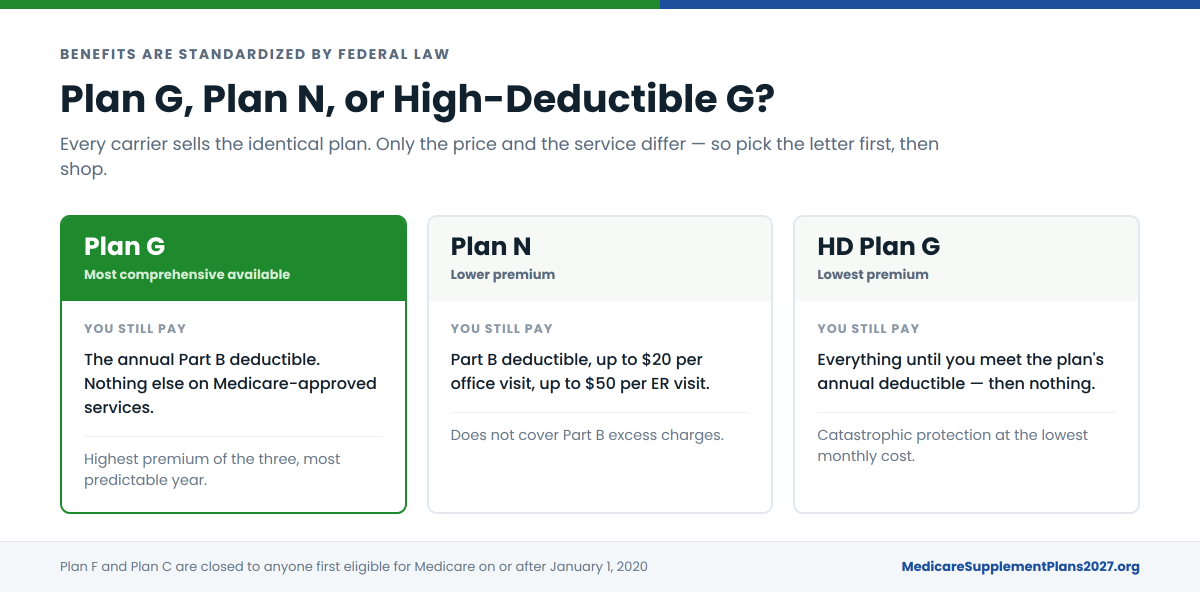
For most people newly eligible for Medicare, Plan G is the most comprehensive option available — it covers everything except the annual Part B deductible. Plan N costs less monthly but adds copays of up to $20 per office visit and $50 per emergency room visit, and doesn’t cover Part B excess charges. High-Deductible Plan G has the lowest premium and the highest exposure. Since benefits are standardized, the “best” choice is the right letter at the lowest price from a carrier with a stable rate history.
➤ How much do Medicare Supplement plans cost in 2027?
Medigap premiums are filed by carrier and by state, and vary with your age, ZIP code and in most states tobacco use. There is no single national price, and any site quoting one is generalizing. Rates for 2027 are set state by state, so comparing quotes for the same plan letter in your own ZIP code is the only reliable way to know your cost.
➤ Do Medicare Supplement plans cover prescription drugs?
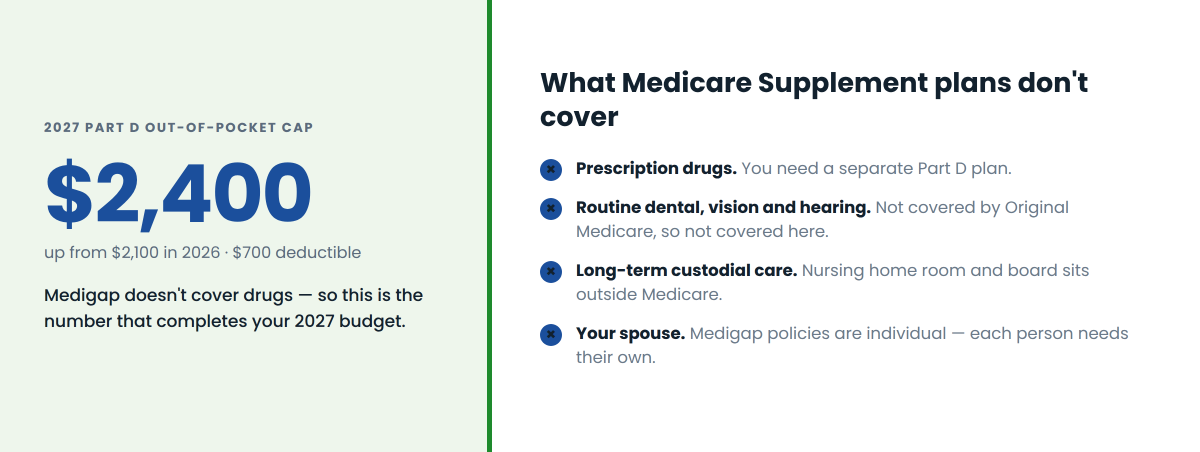
No. Medicare Supplement plans sold today do not include prescription drug coverage, so you’ll need a separate Part D plan. For 2027 the Part D annual out-of-pocket cap is $2,400, up from $2,100 in 2026, and the standard deductible is $700, up from $615. Budget for both your Medigap premium and your Part D costs.
➤ Can I still get Medicare Supplement Plan F in 2027?
Only if you became eligible for Medicare before January 1, 2020. Plan F and Plan C were closed to newly eligible beneficiaries as of that date. If you’re already enrolled in Plan F you can keep it, though closed plans tend to see steeper rate increases over time because no new, younger enrollees join the risk pool. Plan G covers the same benefits except the Part B deductible.
➤ When can I enroll in a Medicare Supplement plan?
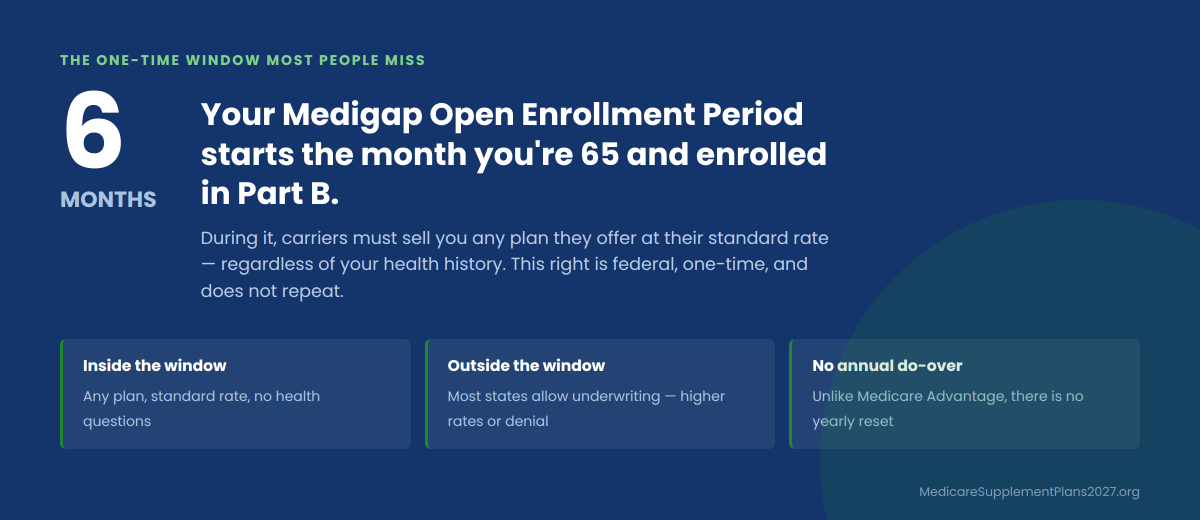
Your Medigap Open Enrollment Period lasts six months, beginning the month you are 65 or older and enrolled in Medicare Part B. During that window carriers must sell you any plan they offer at their standard rate regardless of your health. This right is one-time and does not repeat. Outside it, most states allow medical underwriting, meaning a carrier can charge more or decline coverage based on your health history.
➤ What is the difference between Medicare Supplement and Medicare Advantage?
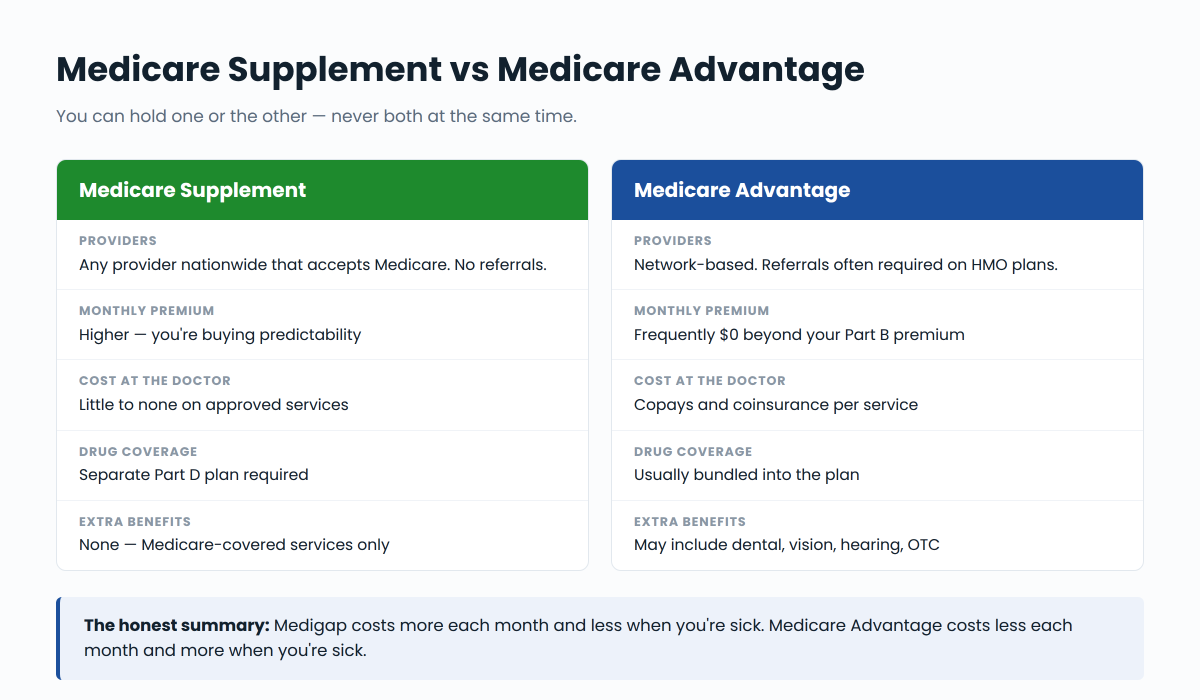
Medicare Supplement works alongside Original Medicare, uses no networks, requires no referrals, and pays your share of Medicare-approved costs — but carries a monthly premium and no extra benefits. Medicare Advantage replaces how your benefits are delivered through a private plan with a provider network, frequently at a $0 premium, often bundling drug coverage and extras like dental and vision, but with copays at each service and an annual out-of-pocket maximum. You cannot hold both at the same time.
➤ Can I switch Medicare Supplement plans later?
You can apply to switch at any time, but outside your Medigap Open Enrollment Period or a guaranteed issue situation, most states allow the carrier to medically underwrite your application. That means they can charge more or decline you. A few states have more generous rules allowing changes without underwriting, so check your state specifically rather than assuming the national default.
➤ Do Medicare Supplement plans have networks?
No. Any provider in the United States that accepts Medicare accepts your Medigap plan, and no referrals are required to see a specialist. This is the main structural difference from Medicare Advantage, and the reason Medigap tends to suit people who travel, split time between states, or want to keep a specific specialist.
➤ Is Plan G or Plan N better for 2027?
It depends on how often you see doctors. Plan G leaves you only the annual Part B deductible and nothing else, which suits people who want predictable costs or use care frequently. Plan N carries a lower premium but adds copays up to $20 per office visit and $50 per emergency room visit, and doesn’t cover Part B excess charges. If the annual premium savings on Plan N exceeds what you’d pay in copays, Plan N wins — otherwise Plan G does.